Role: UX Researcher
Scope: Experience assessment, generative and evaluative research, usability testing, stakeholder alignment, and UX direction across multiple enterprise-scale digital platforms
Context
McKesson is a Fortune 500 healthcare leader, reporting approximately $360B in revenue (FY25). The company is the largest distributor of medical-surgical supplies and equipment in North America and delivers roughly one third of all pharmaceuticals in the region.
The work spanned multiple products within McKesson’s digital portfolio, supporting large-scale B2B and internal ecosystems with direct impact on revenue-critical workflows and executive decision-making.
The Problem
McKesson was undertaking parallel modernization efforts across several large, revenue-critical digital platforms built on long-standing legacy systems. These platforms supported core workflows such as ordering, inventory management, contract tracking, and executive reporting.
As systems evolved, there was limited clarity on where usability, accessibility, and workflow issues most affected users, or how experience improvements should be prioritized without disrupting critical operations. UX research was required to establish an evidence-based view of current-state experiences and inform platform evolution decisions.
Key challenges were:
• Modernizing legacy systems without disrupting critical operations
• Supporting highly diverse user groups, from healthcare providers and internal teams to C-suite executives
• Identifying UX friction in complex, high-volume workflows
• Improving accessibility and consistency across interconnected enterprise systems
• Aligning experience improvements with business priorities
Understanding the Environment
This work required navigating a complex ecosystem of internal teams, customer segments, data platforms, and regulatory constraints.
Research activities were conducted across:
• Customer-facing platforms used by pharmacies and other healthcare providers
• Internal tools supporting supply chain operations, contracts, and executive reporting
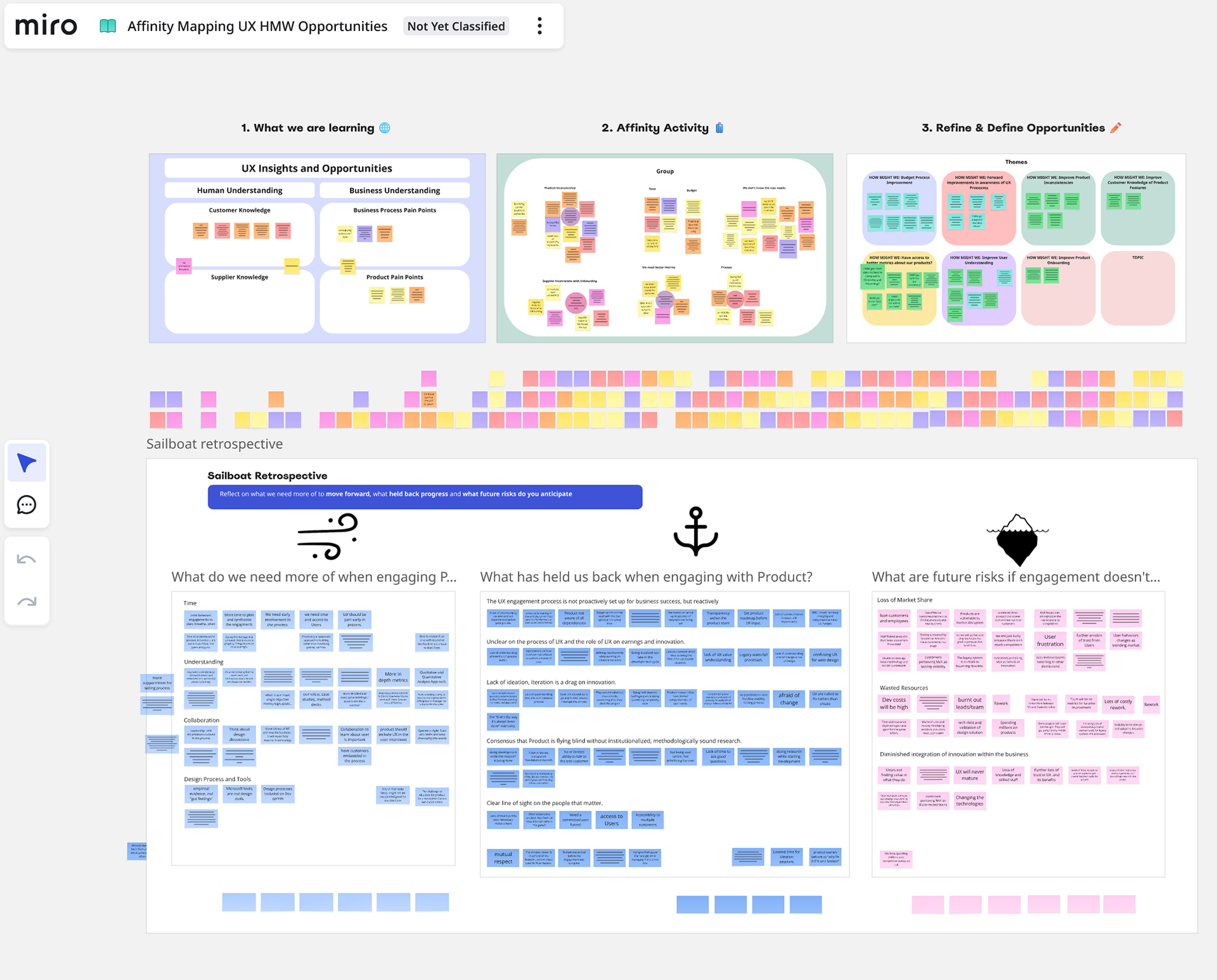
• Stakeholder interviews, workshops, surveys, and focus groups were facilitated with participants ranging from operational teams to C-suite executives. In parallel, business requirements documentation (BRDs), existing design systems, and information architectures were reviewed to understand current-state workflows, segment-specific structures, and systemic gaps across platforms.
• Across these inputs, recurring patterns of friction emerged around discoverability, workflow efficiency, accessibility, and data comprehension, particularly in complex, high-volume, and data-intensive scenarios.
Explorations and Areas of Focus
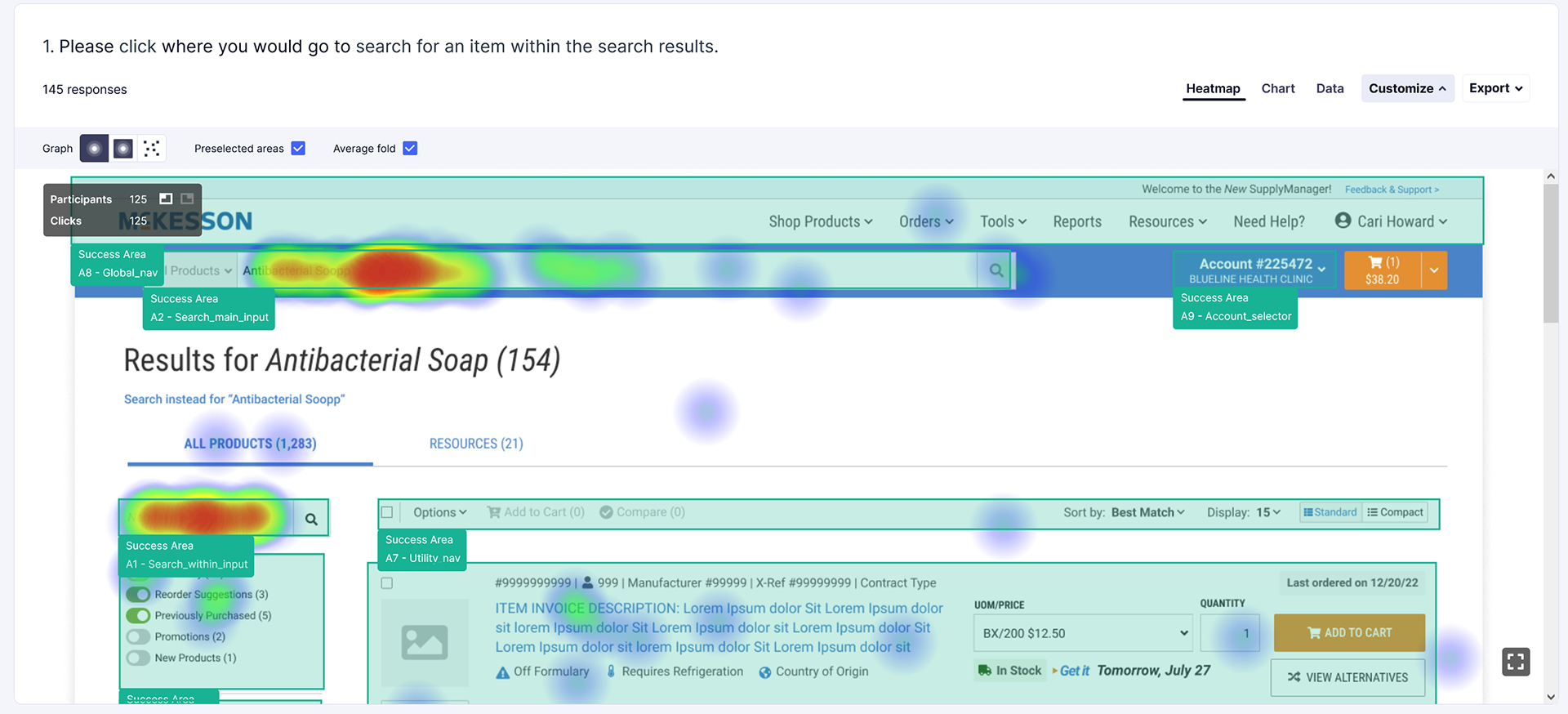
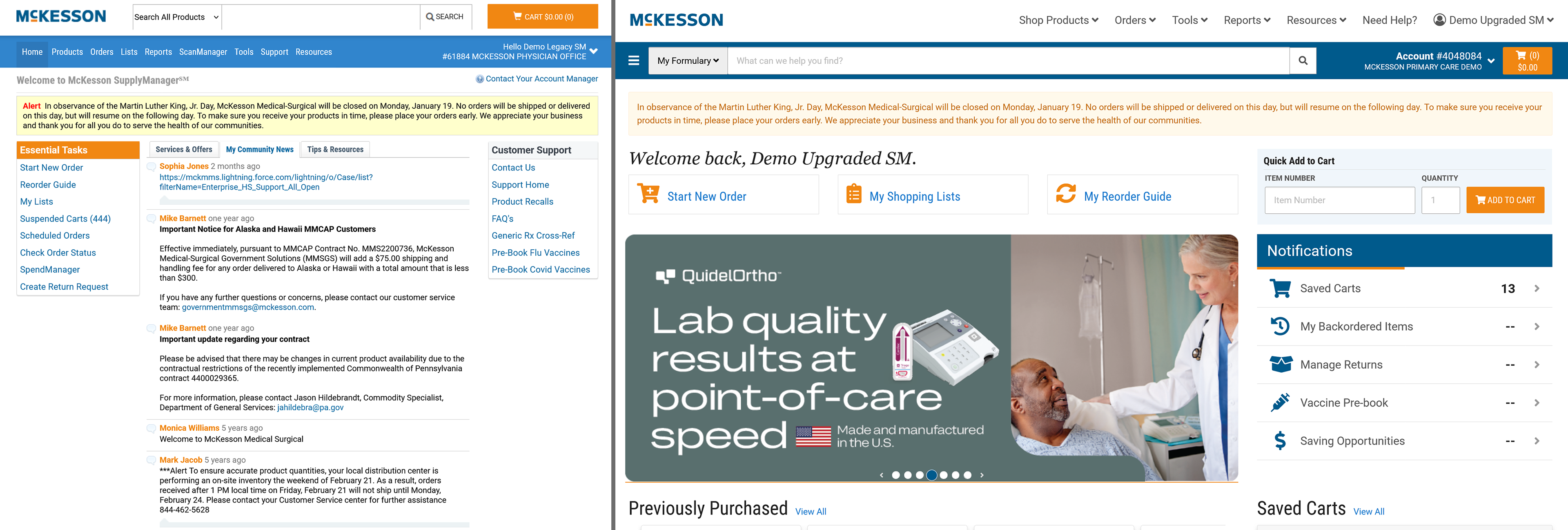
McKesson MedSurg Supply Manager Platform:
Work focused on assessing the customer experience during an active transition from a legacy e-commerce system to a modernized environment for medical supplies and equipment distribution.
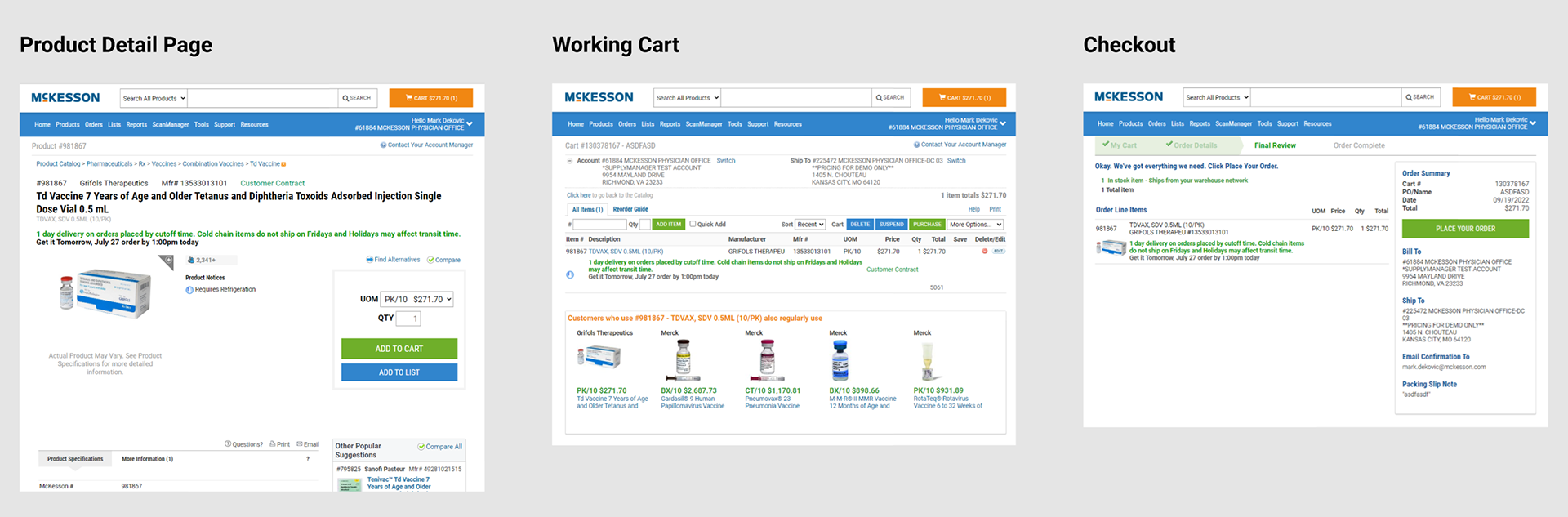
Analysis centered on the structure, accessibility, and usability of the existing design system and information architecture, with focus on Login, Vaccine Management, Product Search, Equipment Innovation, Dynamic ETA and Order Status.
These areas were examined to identify usability and accessibility risks that could affect continuity of use during platform migration and ongoing operations.
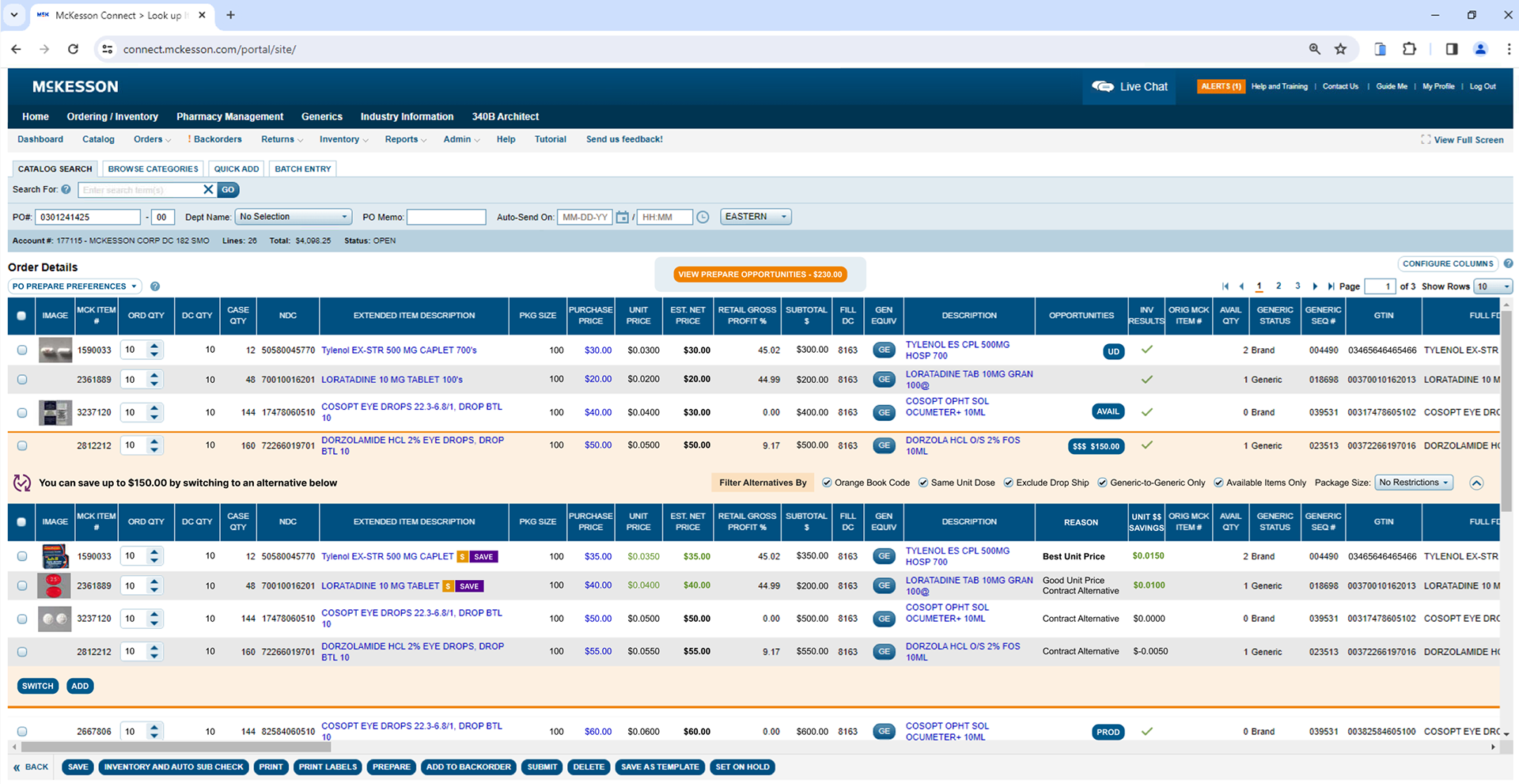
McKesson Connect Platform:
The McKesson Connect platform was examined as a core ordering environment supporting pharmaceutical distribution at scale.
The work focused on how different customer segments navigated purchasing and inventory workflows, and how interaction patterns affected efficiency and conversion. Emphasis was placed on scenarios such as Single- and Multi-Item search, Filtering and Sorting, Bulk actions, Out-of-Stock handling, and Alternative Recommendations, highlighting opportunities to reduce friction in high-volume, repeat workflows.
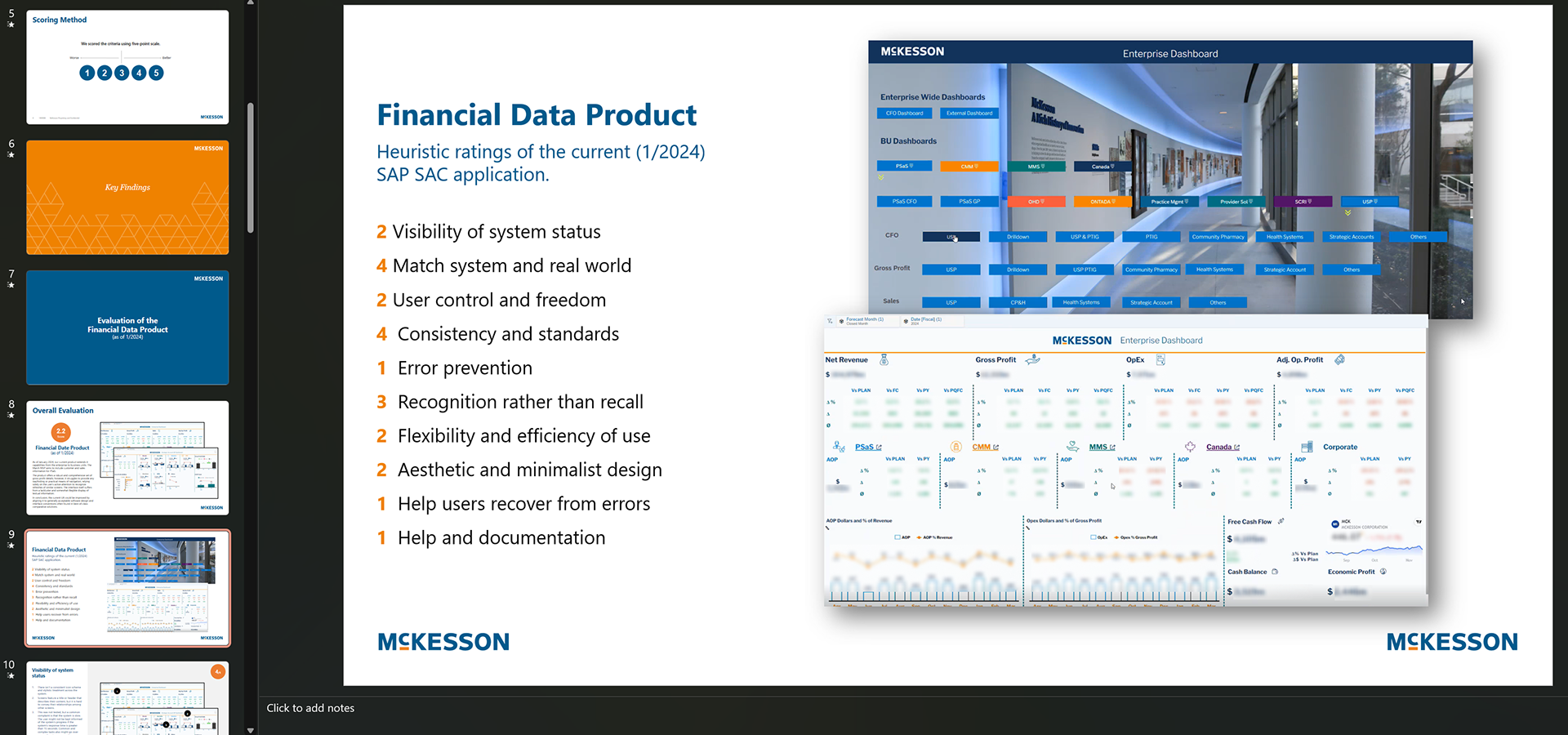
Financial Data Product Dashboard:
This initiative addressed a new internal reporting environment intended for executive and leadership use.
Exploration focused on how financial data was consumed and acted upon, the implications of transitioning analytics workflows from SAC to Power BI, and defining a UX direction supporting both an initial MVP and longer-term product evolution. The work balanced data fidelity, clarity, and decision support in an executive context.
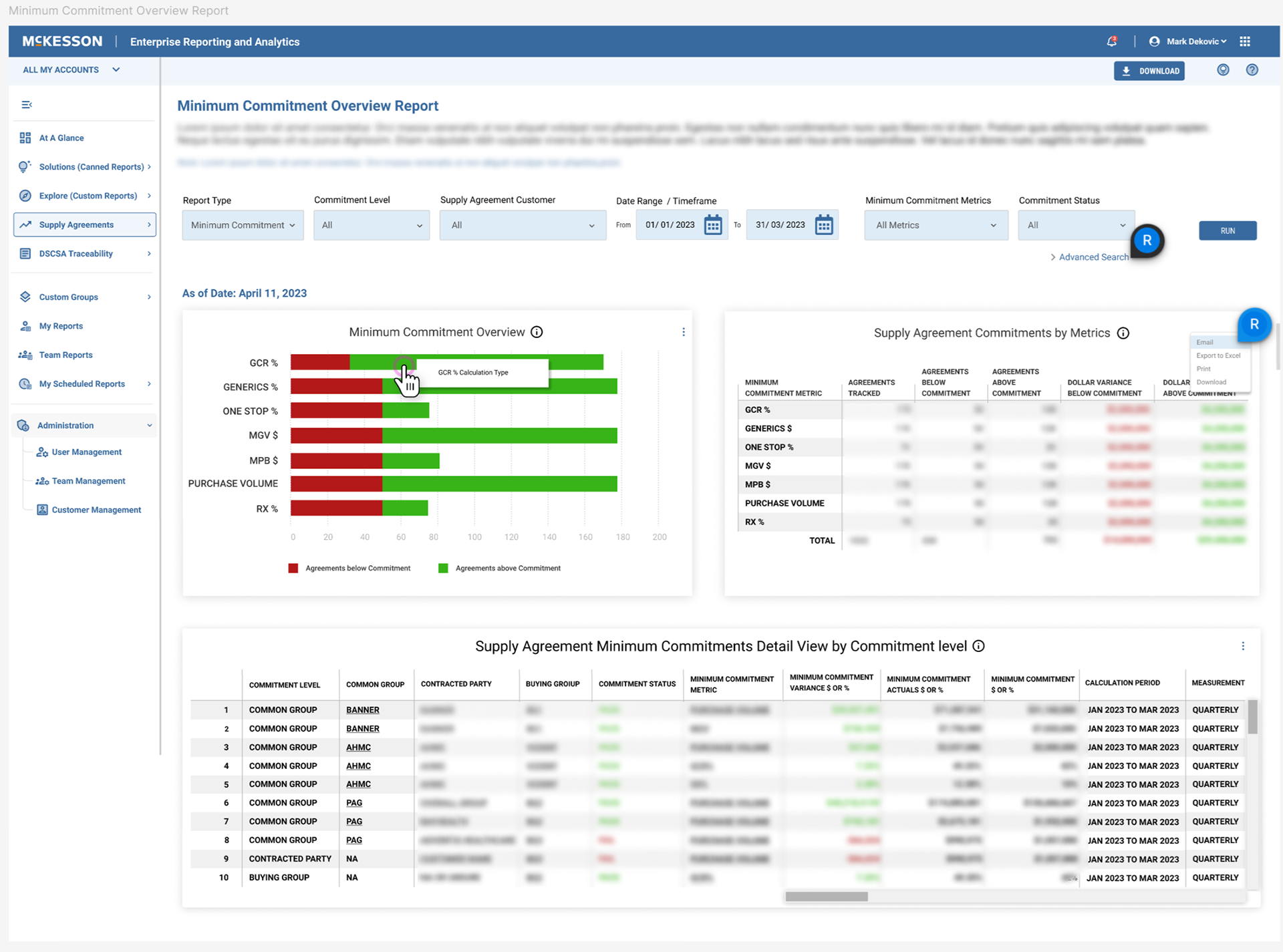
Contract 360/Supply Agreement Performance Dashboard:
This initiative focused on improving visibility into contract and supply agreement performance across multiple customer segments.
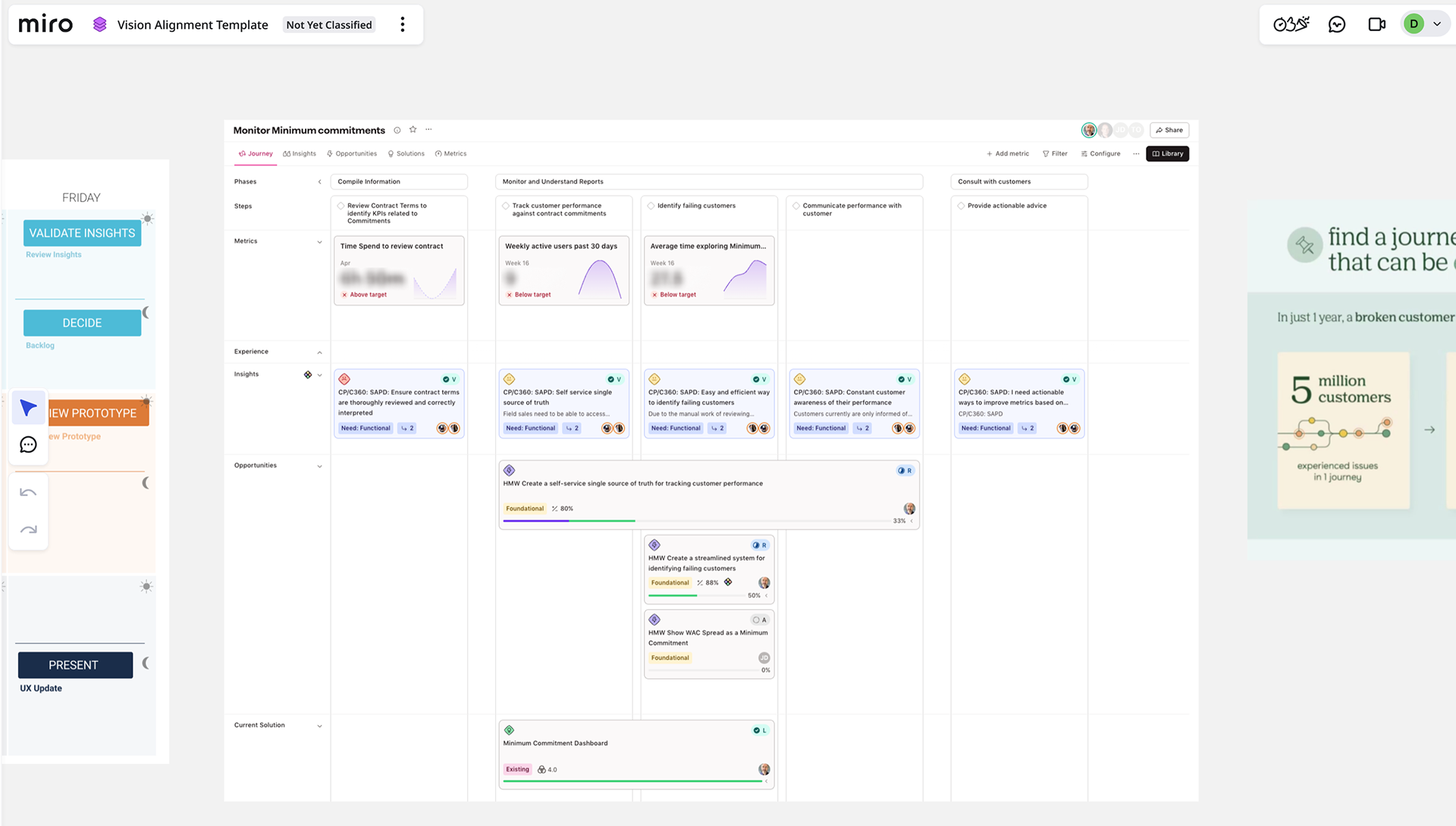
By reviewing BRDs and existing dashboards, differences in workflows, data structures, and tracking needs were identified. Dashboard concepts were developed to support clearer monitoring of agreement performance, reduce manual tracking effort, and enable more consistent comparison across segments.
Cross-Cutting Research & Collaboration
Across all initiatives, work was supported by a consistent set of cross-cutting activities:
• Facilitation of workshops, surveys, focus groups, and stakeholder interviews across internal teams and executive audiences
• Collection and synthesis of qualitative and quantitative data to generate actionable insights
• Heuristic evaluations and usability testing conducted at scale across enterprise platforms
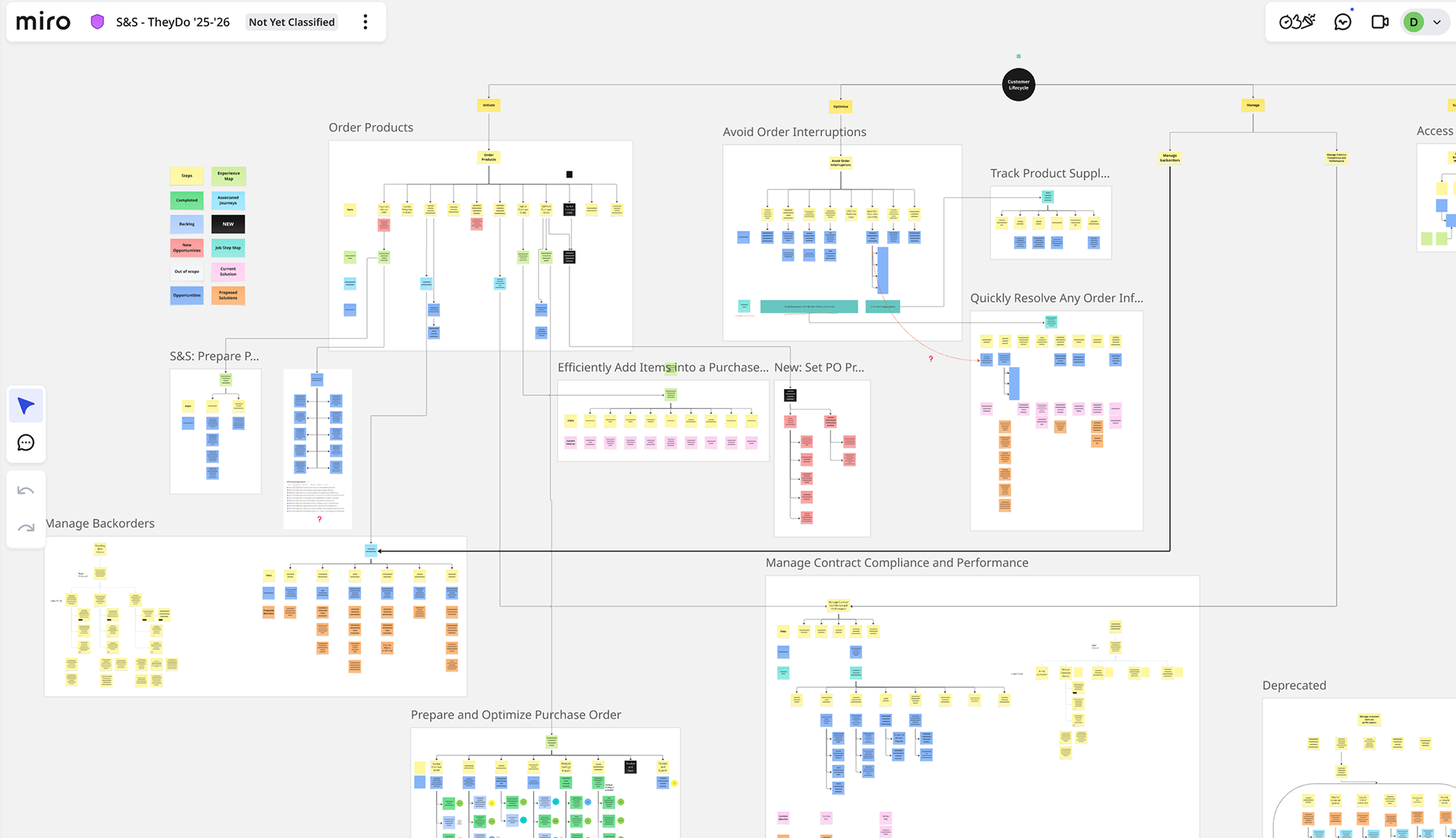
• Translation of findings into journey maps, jobs-to-be-done frameworks, and prioritization inputs
• Ongoing collaboration with product, data, and CX research teams to align UX insights with delivery and business goals
Outcomes and Impact
• Provided a consolidated, evidence-based view of UX friction across multiple enterprise platforms, replacing fragmented, initiative-specific assumptions
• Informed platform transition and modernization decisions by highlighting where legacy patterns posed usability or accessibility risks
• Contributed to changes in how inventory, ordering, and data-heavy workflows were evaluated and prioritized across products
• Supported executive and product decision-making through comparative, cross-platform UX insights
• Established a shared reference point for UX considerations during ongoing platform evolution